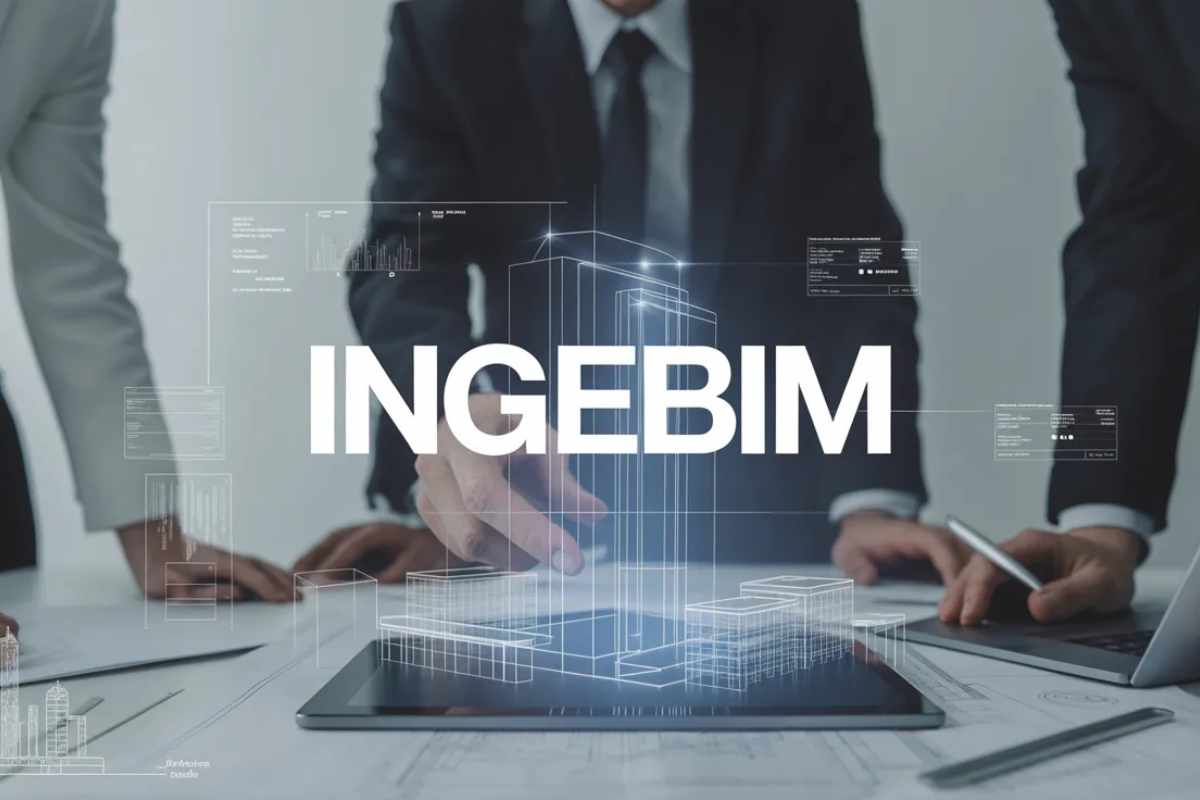
Construction projects have grown more complex, and the old way of working, with disconnected drawings, late design changes and costly rework, no longer holds up. This is where IngeBIM comes in.
IngeBIM is a BIM-focused engineering consultancy and digital solutions provider that specializes in infrastructure and construction projects. It helps engineering and construction firms plan, design and ,deliver projects through Building Information Modeling (BIM).
This article explains what IngeBIM does, how BIM improves a project, and where the name comes from.
What Is IngeBIM?
IngeBIM combines engineering expertise with digital project delivery. Its public website describes its mission as helping construction and engineering firms adopt BIM for smarter design, planning and execution.
In practice, a consultancy like this acts as a bridge. It brings the technical knowledge of engineers together with the software, standards and workflows that make BIM work.
What Does the Name Mean?
“IngeBIM” appears to blend “inge,” a common root for “engineering” in several languages, with “BIM.” The root is also linked to the English word “ingenious.” Both words trace back to the Latin ingenium, which meant natural talent or cleverness. That is also where the word “engineer” comes from.
Understanding BIM: The Foundation of IngeBIM’s Work
Building Information Modeling is a process for creating and managing a digital model of a building or infrastructure asset. A BIM model holds more than geometry. It also carries data on materials, quantities, schedules, costs and maintenance needs.
BIM vs. Traditional CAD
CAD produces drawings. BIM produces an intelligent model where every element is connected.
- Change a wall in one view, and every related view updates.
- Quantities and costs come directly from the model.
- Teams can test designs before anyone breaks ground.
Core Services a BIM Consultancy Like IngeBIM Offers
BIM consultancies focused on engineering typically cover the following areas. Check the company’s website for its current service list.
BIM Modeling and Coordination
Engineers build detailed 3D models for architecture, structure and MEP (mechanical, electrical, and plumbing) systems. They then combine these models into one coordinated view.
Clash Detection
Software checks whether, for example, a duct runs through a beam. Finding these conflicts in the model costs far less than fixing them on site.
Infrastructure Design Support
Roads, bridges, utilities and ot,her civil works benefit from BIM, because large linear projects involve many stakeholders and tight tolerances.
BIM Consulting and Implementation
Many firms want BIM but don’t know where to start. A consultant can help set up workflows, define a BIM Execution Plan (BEP), and train teams.
Digital Solutions for Planning and Execution
Models can feed into 4D scheduling, 5D cost estimation and facility management. This turns the model into a tool for the entire project lifecycle.
Benefits of Working with a BIM-Focused Engineering Partner
Firms that adopt BIM through an experienced partner usually see the following gains:
- Fewer errors: Coordinated models reduce design conflicts.
- Better cost control: Accurate quantities improve budgeting.
- Faster decisions: Everyone works from the same up-to-date information.
- Improved collaboration: Architects, engineers and contractors share one source of truth.
- Lower long-term costs: Operators receive a data-rich model for maintenance.
The open standards body buildingSMART International supports this kind of collaboration through open formats such as IFC, which let teams exchange models across different software.
Who Benefits Most from IngeBIM’s Approach?
- Contractors that want fewer surprises on site
- Engineering firms that are moving from 2D drawings to BIM
- Developers and asset owners who want reliable data from design to operation
- Public infrastructure teams managing large, multi-party projects
IngeBIM and Ingenium: Clearing Up the Confusion
Some people searching for “IngeBIM” land on pages about “Ingenium” instead. Here is how the terms differ.
Ingenious: Definition and Meaning
“Ingenious” is an adjective meaning clever, original and inventive. A person who solves a problem in a smart, creative way acts ingeniously. The word comes from the Latin ingenium, meaning innate ability.
Ingenium in My Hero Academia
Ingenium is also the hero name of a character in the anime My Hero Academia (MHA). Tensei Iida first held the name, and his younger brother Tenya later took it up. The anime has no connection to IngeBIM, the engineering consultancy.
The shared roots do point to the same idea, though: ingenuity applied to solving problems. That idea is at the heart of good engineering.
How to Choose a BIM Consultancy
Before hiring any BIM provider, ask these questions:
- Which BIM standards do they follow, such as ISO 19650?
- Do they have experience with your project type?
- Which software and file formats do they support?
- How do they handle collaboration and model quality checks?
- Can they show case studies or references?
Final Thoughts
IngeBIM represents a growing trend in construction: engineering knowledge paired with digital tools. As infrastructure projects get larger and more demanding, BIM-driven delivery is becoming the standard rather than the exception.
If you are exploring BIM for your next project, start by defining your goals. Then speak with a specialist partner, such as IngeBIM, about how to reach them.
FAQs:
Which BIM standards do they follow?
A strong answer names specific standards and explains how they use them. Look for ISO 19650 (information management), IFC for open data exchange, and any national standards, such as the UK BIM Framework or local BIM mandates. A good provider also mentions a BIM Execution Plan (BEP) on every project.
Do they have experience with your project type?
A good answer points to similar projects, such as roads, bridges, utilities, commercial buildings or industrial sites. It should also say what role they played, for example, modeling, coordination or full BIM management.
Which software and file formats do they support?
Expect specifics: Revit, Navisworks, Civil 3D, Tekla or similar tools, plus export formats like IFC, DWG, NWD and BCF. A good provider also explains how they handle your team’s preferred software.
How do they handle collaboration and model quality checks?
A good answer describes a real process:
- A shared Common Data Environment (CDE) for files
- Regular coordination meetings and clash detection runs
- Model checks for naming, data, and geometry before each issue
- Clear roles for who approves what
Can they show case studies or references?
A good answer offers case studies with outcomes, such as fewer clashes found, time saved or cost avoided. They should also be willing to connect you with past clients.