Why Im Building CapabiliSense Medium? Over my 35 years in tech, I’ve done a bit of everything. I started with basic IT and network administration, moved into building software and software development teams, and eventually ended up doing enterprise transformation work at AWS.
I also led Cloud, Digital, and Data (before AI hype) transformations for companies like AWS, Airbus, AstraZeneca, Verisure, European Union agencies, Decathlon. And many more.
Again and again, I saw the same blockers coming up. It usually wasn’t because the tools were bad or the core idea wasn’t realistic. More often, it was due to a lack of alignment, clarity, and trust between people.
Think about it: when projects fail, it’s almost never the software’s fault. It’s usually because of pushback, resistance, poor communication, or just no shared vision. People often find themselves wondering
What am I actually supposed to do to help with that big vision?
- How does this affect me?
- Is this just going to add more work to my plate?
Questions like these can kill even the best ideas. That’s why I’m building this startup, CapabiliSense to deal with those exact issues head on.
90% Failure Rates: It’s Usually About People
You’ve probably heard the numbers, or maybe even lived through them: somewhere between 80% and 95% of large-scale digital, AI, or cloud transformations fail.
People often point fingers at budgets or the tech itself, but based on what I’ve seen, it’s the human factor that usually derails things.
Maybe the leaders aren’t aligned. Maybe compliance details never got sorted out. Or perhaps a CISO or Chief Risk Officer shows up late in the game and blocks the whole program because something was missed (or because he decides to do so).
The challenge I kept seeing was the lack of a way to get a clear, objective view of the entire situation. You had tools for tracking data and processes, sure.
But there wasn’t a solution that could effectively cut through the noise the conflicting opinions, the potential politics, the hidden resistance, the missing information especially when it came to understanding the human, emotional, and cultural landscape.
What was missing was a way to get a more ‘apolitical’ dashboard, something that could highlight conflicts or gaps and show what was really going on beneath the surface.
My “Aha” Moment?
In fact, there wasn’t a single “Aha” moment when I stopped and said, I need this platform right now. It was more like seeing the same patterns of failure repeat themselves, over and over again.
It was the same routine every time: gathering information, assessing business objectives, and then translating everything so teams could understand how it affected them personally.
After seeing that pattern enough times, I asked myself, Why can’t we do this through a platform? That’s when my mind took this problem as a background task. And that initial question, born from repeated experience, was really the core of the aha moment.
From AWS Frameworks to CapabiliSense
So, back when I was at AWS, I worked on creating and scaling transformation frameworks. I also built assessments for things like Cloud Maturity and Migration Readiness which were used by hundreds of clients and thousands of Amazon employees internally.
That time taught me a lot about how structured roadmaps can help big companies move faster. But it also showed me that every roadmap has to be tailored; there’s no one-size-fits-all fix.
And I learned just how tough it is to take a good theory and make it actually work at scale.
Why call it CapabiliSense? Because it’s fundamentally about sensing a company’s capabilities, its strengths, its weaknesses, its gaps and then figuring out the smartest path forward.
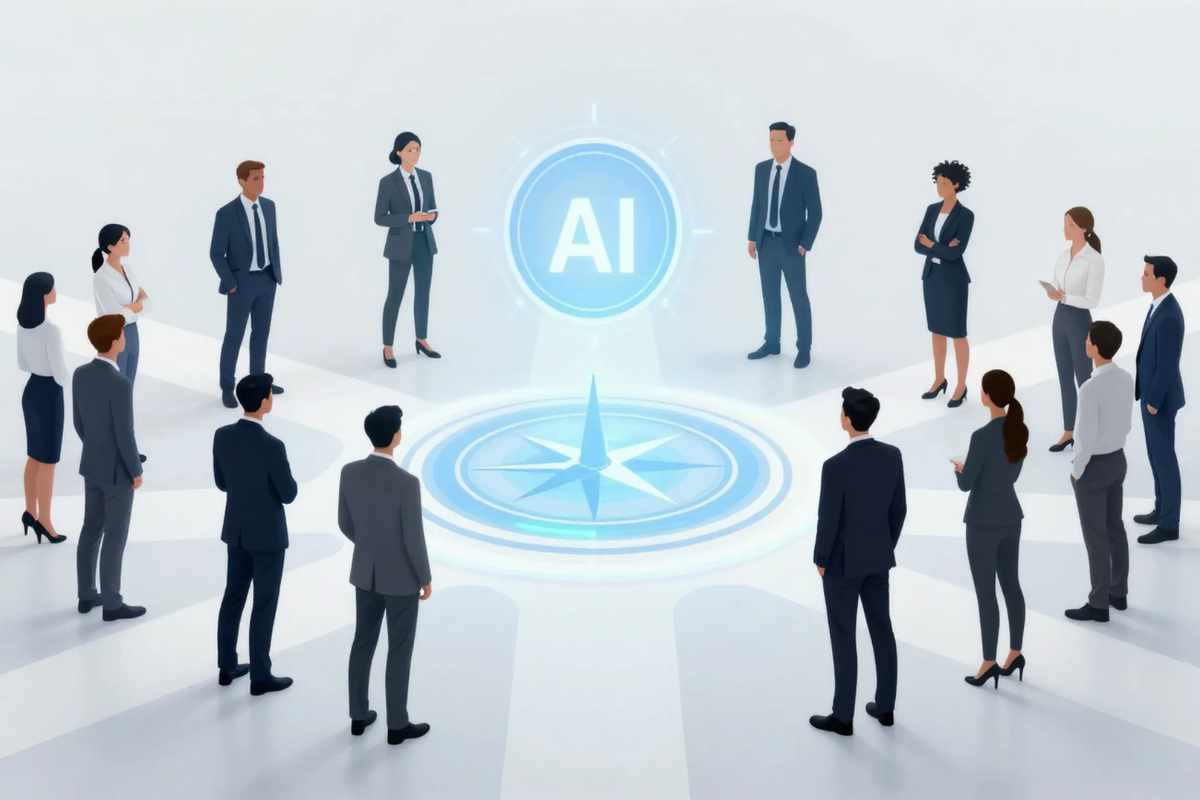
It’s designed to bring clarity to roadmaps and build trust across teams, managers, leaders, suppliers… really, everyone involved. You can think of it as an AI-powered compass or GPS for transformation.
It shows you where you are, where you could go, and helps you figure out how to get there without losing your team, your job, or your sanity.
Why a Blog?
Well, I want to show what I’m doing. I want to share the real, behind the scenes story of building a startup, the wins, the failures, and everything in between.
This blog is my space (pun intended for those who got it) to talk openly about what happened in the past, what’s happening now, and what I hope happens next.
I’ll share stories from my experiences, including moments from transformation programs that both failed and succeeded.
I’ve seen a lot regarding why transformations fail, and I think it’s important to talk about my failures as well. Ultimately, I want to focus on the human side of transformation, and also the human side of building an AI-focused startup.
Who Is This For?
This blog is for anyone who’s curious about a startup journey, even though I know there are tons of startups out there.
I want it to be for my ambassadors, the people who know me and support what I’m doing, even if they aren’t totally sure what exactly I’m building yet.
It’s also for investors of all types, not just those with money, but also those who invest their valuable time and expertise. I hope this journey will attract them to get involved.
And finally, this blog is for what I call the locomotives. These are the thought leaders or founders who’ve walked this path before me, whether they succeeded or failed.
Maybe they’ll see something I’m missing, or perhaps point out where I’m on the right track. Let’s see how it goes.
Looking Ahead
Over the next few weeks (and hopefully months), I’ll share how we’re progressing with building our startup things like the MVP, updates on partner or customer use cases.
I’ll also share my thoughts on AI, how it’s changed my own professional life and how it might change yours sooner than you think.
Expect my honest feedback, opinions, and insights, delivered in a kind of reality-show style. You can follow along with me on this interesting, exciting, and often frustrating journey of building an AI startup. Let’s go!
FAQ’s
What is capability-driven design?
Capability-driven design is an approach where systems are structured around what they can do, not just what features they expose. It focuses on stable, reusable abilities that deliver value.
Is capability-driven design the same as domain-driven design?
No. They are related but different. Domain-driven design focuses on business domains and models. Capability-driven design focuses on what the system can reliably do across domains.
Does this approach work for small teams?
Yes. Small teams often benefit the most because clarity reduces rework. Even simple capability maps improve alignment.
How does this help with AI coding tools?
AI tools perform better with clear structure and boundaries. Capability definitions provide context that improves AI suggestions.
Do I need microservices to use this?
No. Capability thinking works with monoliths, modular monoliths, and microservices. It is about design, not deployment style.
How often should capabilities be reviewed?
Review them quarterly or during major roadmap shifts. Capabilities change slower than features but still evolve.